La Brilliante: A Font That Feels Like It Was Written for You
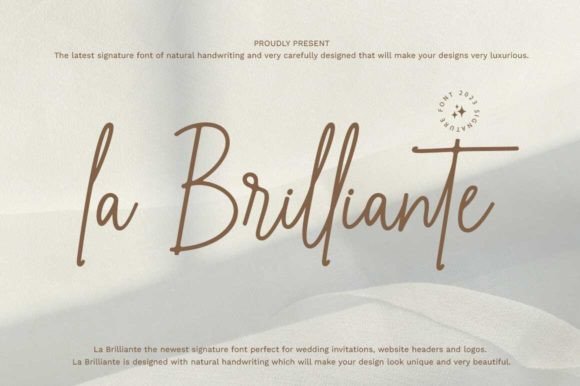
There’s a moment in every design project where the typeface either clicks into place or falls completely flat. You’ve got the layout, the color palette, the imagery—but something’s missing. That missing piece is often a font with genuine personality, one that doesn’t just display words but actually communicates a feeling. La Brilliante is that kind of typeface. It’s a premium handwritten font designed to bring warmth, authenticity, and a touch of elegance to everything from wedding invitations to website headers. What sets it apart isn’t just its natural flow—it’s the way it manages to feel both personal and polished at the same time.
Unlike many script fonts that can look either too casual or overly formal, La Brilliante strikes a balance that works across a surprising range of applications. The strokes have a natural, slightly varied weight that mimics real handwriting without sacrificing readability. This makes it an excellent choice for projects where you want to convey sincerity—think thank-you cards, boutique branding, or a blog that feels like a conversation rather than a broadcast. It’s the kind of typeface that makes a design feel considered, not just assembled.
Why Designers and Business Owners Are Reaching for This Typeface
If you work in branding, you know that typography is one of the most powerful tools for shaping perception. A font can make a brand feel luxurious, approachable, innovative, or traditional—often before a single word is consciously read. La Brilliante excels in contexts where you want to project creativity and human connection. For a small business owner, it could become the cornerstone of a brand identity that feels artisanal and genuine. For a content creator, it might be the perfect way to add a signature touch to social media graphics or digital products.
Consider a wedding stationery designer. They need a font that feels romantic and bespoke, but also legible enough for details like dates and addresses. La Brilliante’s natural curves and balanced spacing make it ideal for invitations, save-the-dates, and thank-you notes. It doesn’t scream for attention—it whispers, which is often more effective. Similarly, for a lifestyle blogger, using this font for pull quotes or section headers can break up text-heavy pages and draw readers into key points without disrupting the overall flow.
Practical Applications That Go Beyond the Obvious
While La Brilliante shines in traditional design projects like logos and invitations, its versatility extends further than many people initially realize. Here are some real-world uses where it can add significant value:
- Packaging Design: For products that emphasize craftsmanship or organic origins, a handwritten font can reinforce that narrative on labels, boxes, and tags.
- Digital Products: E-books, worksheets, and online course materials benefit from typography that feels personal and approachable, helping to build trust with users.
- Social Media Graphics: In a feed full of bold sans-serifs and generic scripts, a font with authentic character can make your posts more memorable and shareable.
- Editorial Layouts: Magazines, lookbooks, and blogs can use it for headlines or pull quotes to add visual interest and guide the reader’s eye.
- Merchandise: Tote bags, mugs, and prints often rely on typography that feels custom—La Brilliante delivers that without the cost of hand-lettering.
What’s important is matching the font’s personality to the project’s goals. A law firm’s website might not be the right place for a script font, but for a photographer’s portfolio or a café’s menu, it could be exactly what’s needed to create a cohesive, inviting atmosphere.
Pairing La Brilliante with Other Fonts for Maximum Impact
One of the most common questions about script or handwritten fonts is how to pair them with other typefaces. The key is contrast and hierarchy. Since La Brilliante has a distinct personality, it works best as an accent rather than the primary body font. Consider pairing it with a clean, neutral sans-serif for body text—this ensures readability while allowing the script font to stand out in headings or logos.
For example, if you’re designing a brand identity for a boutique bakery, you might use La Brilliante for the logo and menu headers, then pair it with a simple sans-serif like Montserrat or Open Sans for descriptions and prices. This combination maintains clarity while reinforcing the artisanal feel. Similarly, in a magazine layout, using La Brilliante for article titles alongside a serif like Lora or a sans-serif like Helvetica Neue can create a dynamic visual rhythm that guides the reader naturally through the content.
Always test your pairings in context. A font that looks great on your screen might not work as well in print, or vice versa. Check how the combination performs at different sizes, especially for digital projects where users might be viewing on mobile devices. Accessibility matters too—ensure that your chosen fonts maintain adequate contrast and spacing for all readers.
Understanding the Included Styles and Licensing
La Brilliante typically comes with multiple stylistic alternates, ligatures, and swashes, giving you flexibility to customize the look for different projects. These extras can be invaluable for creating unique letter combinations or adding decorative flourishes to logos and invitations. Take the time to explore the font’s full character set—you might discover options that perfectly suit your needs.
Equally important is understanding the licensing. If you’re using the font for commercial projects—whether for a client or your own business—make sure you have the appropriate license. Most premium fonts offer different tiers for personal and commercial use, and some may have restrictions on certain applications like merchandise or digital distribution. Reading the license agreement carefully can save you from potential issues down the road.
Final Thoughts on Choosing the Right Font for Your Project
Typography is more than just picking something that looks nice. It’s a strategic choice that affects how your audience perceives your message. A font like La Brilliante isn’t right for every project, but when it fits, it can elevate a design from generic to memorable. The key is to consider your audience, your goals, and the context in which the font will be used.
Before committing to any typeface, ask yourself: Does this font reflect the personality of my brand or project? Is it legible in the sizes and formats I’ll need? Does it pair well with other design elements I’m using? If you can answer yes to those questions, you’re on the right track. And sometimes, the best way to know is to simply try it out—mock up a few designs, get feedback, and see how it feels in action.
In the end, the right font should feel like a natural extension of your vision. La Brilliante, with its blend of elegance and authenticity, offers a compelling option for anyone looking to add a human touch to their designs. Whether you’re crafting a brand identity, designing packaging, or creating social media content, it’s worth exploring how this typeface might help you connect with your audience on a more personal level.