Nickota: Where Typewriter Soul Meets Modern Code
There’s a particular kind of magic in the clatter of an old typewriter or the green-on-black glow of a retro computer terminal. It’s a feeling of precision, authenticity, and hands-on creation that often gets lost in our world of smooth, flawless vector graphics. For designers, developers, and brand builders looking to recapture that tangible, structured energy, the Nickota font emerges as a powerful tool. This isn't just another typeface; it's a bridge between the nostalgic mechanics of yesterday's technology and the clean demands of today's digital interfaces, offering a unique voice for projects that celebrate the beauty of code and structured systems.
A Typeface with a Built-In Rhythm
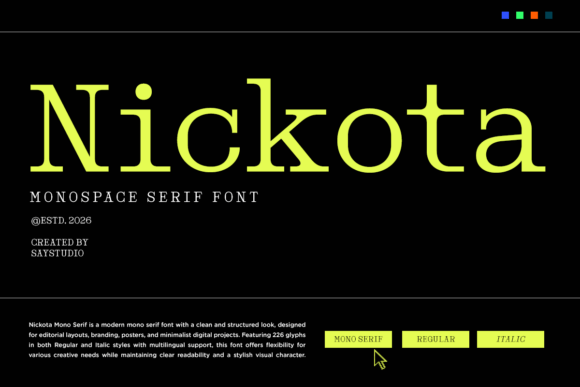
At its core, Nickota is a modern monospaced serif font. What does that mean for your project? "Monospaced" means every character occupies the same width, a trait inherited from typewriters and early coding terminals. This creates an immediate visual rhythm, aligning text into neat, predictable columns that evoke a sense of order and technical precision. The "serif" element is the subtle twist—it adds a touch of refined, classic structure to each letterform, moving it beyond pure utility into the realm of deliberate design. The result is a typeface that feels both familiar and fresh, carrying the authentic energy of a developer's editor while maintaining the readability and sophistication needed for broader audiences.
Practical Applications Beyond the Code Editor
While its inspiration is clear, Nickota's utility spans a surprising range of creative and commercial projects. Its structured personality makes it a standout choice for:
- Branding & Identity: Perfect for tech startups, coding bootcamps, software-as-a-service (SaaS) products, cybersecurity firms, or any brand that wants to communicate innovation, reliability, and a hands-on approach. It builds instant recognition in a crowded market.
- Logo Design: The distinct, monospaced characters create logos that are memorable and highly legible, even at small sizes. They work exceptionally well for app icons, favicon design, and wordmarks.
- Packaging & Merchandise: Imagine this font on packaging for a new mechanical keyboard, a developer toolkit, or specialty coffee for night owls. It adds instant, thematic credibility. It’s also ideal for t-shirts, stickers, and notebooks aimed at the tech and maker communities.
- Digital & Editorial Design: Use it for headings on a tech blog, pull quotes in a magazine about future trends, or the interface of a portfolio website for a developer. Its clarity makes it suitable for short blocks of text in presentations and slide decks, ensuring information is conveyed with clean authority.
The font’s typewriter-inspired rhythm is particularly effective in social media graphics, where a bold, clean statement needs to stand out in a fast-scrolling feed. For posters advertising a hackathon, a retro gaming event, or a sci-fi film festival, Nickota provides the perfect aesthetic anchor.
Improving Your Visual Communication
Choosing a font like Nickota isn't just about style; it's a strategic decision that can enhance how your message is received. Its consistent character width promotes exceptional visual consistency across all your materials, from a website header to a printed invoice. This repetition builds a cohesive brand experience. The unique blend of monospaced structure and serif detail boosts brand recognition—people will start to associate that specific, technical-yet-refined look with your business.
Contrary to what some might assume, the monospaced format can actually improve readability in certain contexts. The clear separation between characters reduces visual clutter, making it excellent for displaying data, short codes, or any information where precision is key. This, in turn, contributes to a more professional presentation. A well-chosen typeface signals that you’ve considered every detail of your user's experience, which can significantly increase audience engagement and trust.
Making Nickota Work for You: Practical Tips
Integrating a new premium font into your workflow requires a bit of thoughtful planning. Here’s how to get the most out of a typeface like Nickota:
- Match the Mood to the Mission: Before applying it, ask: Does my project’s goal align with Nickota’s personality? It excels in contexts that value innovation, structure, and a hint of retro-tech cool. It might feel out of place for a whimsical children's brand or a luxurious jewelry line, but it’s perfect for a developer toolkit, a fintech app, or a cyberpunk-themed event.
- Master the Art of Font Pairing: A powerful display font like Nickota often works best when paired with a simpler, highly readable sans serif font for body text. Think of it as a lead singer with a solid band behind it. Try pairing it with a clean geometric sans serif for a modern, balanced look, or with a grotesque sans serif for a more industrial feel. Always test pairings on your actual content.
- Explore the Included Styles: A quality commercial font family usually comes with more than one weight. Check if Nickota includes bold, light, or italic variations. Using a bold weight for headlines and a regular weight for subheads can create a clear visual hierarchy without introducing another font, keeping your design tight and cohesive.
- Prioritize Readability Testing: Always test your text at the actual size it will be viewed. A sentence that looks great on your 27-inch monitor might be challenging to read on a mobile phone. Pay particular attention to letter spacing and line height to ensure comfortable reading, especially for longer paragraphs.
- Understand Commercial Licensing: If you're using Nickota for client work, merchandise for sale, or a commercial product, ensure you have the correct license. Most premium fonts come with clear licensing terms for different use cases—desktop, web, app, or server. Reviewing this upfront protects you and your client legally.
Ultimately, typography is about communication. Nickota offers a distinct, modern voice for a specific set of messages. By understanding its strengths and applying it with intention, you can transform it from a simple design asset into a core component of your project's identity, delivering that authentic coding energy with a polished, professional edge that resonates with your audience.