Pavon: A Typeface with the Soul of an Italian Poster
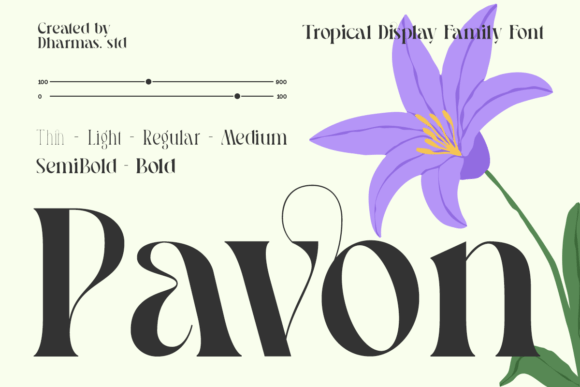
Imagine strolling along the shore of an Italian lake in the early 1910s. The air is warm, and the landscape is dotted with elegant Art Nouveau posters advertising travel, luxury, and leisure. This is the world that inspired Pavon, a brand-new modern typeface family that captures that specific blend of romance, eccentricity, and delicate sophistication. It’s a font that feels like a garden in full bloom—structured yet wild, bold yet intricate. For designers and creators seeking a premium font with a distinct personality, Pavon offers a visual language that is both timeless and strikingly contemporary.
More Than Just a Display Serif: The Character of Pavon
Pavon is classified as a display serif, meaning it’s crafted to command attention in headlines and short bursts of text. Its singular Bold weight delivers high contrast and maximum visibility, making it a powerful tool for impactful design. But what truly sets it apart are its extravagant alternates and 21 stylistic ligatures. These features allow letters to combine in fluid, unexpected ways, much like the organic curves found in nature or Art Nouveau ironwork. Each glyph is meticulously designed to ensure a harmonious transition from one to the next, creating a rhythmic and melodious flow that elevates any composition.
This isn’t a font for lengthy body copy. Its strength lies in its ability to infuse projects with a nonconformist, romantic, and delicate character. Think of it as the typographic equivalent of a perfectly crafted logo or a piece of vintage jewelry—it’s a statement piece designed to be admired.
Where Pavon Truly Shines: Practical Applications for Creators
Understanding a font’s personality is one thing; knowing where to deploy it is another. Pavon’s unique aesthetic makes it a versatile asset across a spectrum of creative and commercial projects. Here’s how you can put it to work:
- Branding & Logo Design: For brands in the luxury, artisanal, beauty, or hospitality sectors, Pavon can become the cornerstone of a brand identity. A logo set in Pavon immediately communicates elegance, heritage, and attention to detail. It’s perfect for boutique hotels, high-end cosmetics, specialty coffee roasters, or bespoke craft businesses.
- Packaging Design: On a shelf crowded with minimalist sans-serifs, Pavon’s curves and ligatures make products pop. Use it for labels on wine bottles, gourmet food packaging, or artisanal candle boxes. Its visual appeal can tell a story of quality and craftsmanship before the customer even reads the product description.
- Editorial & Print Layouts: Magazine covers, book titles, and event posters benefit immensely from Pavon’s dramatic flair. It can set the tone for a feature story on vintage travel or add a touch of romanticism to a wedding invitation suite. For editorial design, it provides a strong visual anchor.
- Digital Presence: While not for long paragraphs, Pavon is excellent for website hero sections, blog post titles, and key call-to-action headers. It ensures your most important messages are seen and remembered. Paired with a clean sans serif font for body text, it creates a balanced and professional hierarchy.
- Social Media & Marketing Assets: In the fast-scrolling world of social media, Pavon stops the thumb. Use it for Instagram quote graphics, Pinterest pins, or Facebook ad headlines. Its distinctive look enhances brand recognition and makes your content instantly identifiable in a crowded feed.
- Merchandise & Invitations: From tote bags and t-shirts to wedding invitations and event programs, Pavon adds a layer of sophistication. Its romantic character is ideal for projects meant to feel special and personal.
Choosing the Right Font: A Practical Guide for Your Project
Integrating a new font like Pavon into your workflow requires more than just liking its look. Here’s some practical advice to ensure it works for you, not against you.
Define Your Project’s Goal First
Before you even open your design software, ask: What is the primary emotion or message I need to convey? If your goal is to project modern minimalism, Pavon might not be the right choice. But if you’re aiming for elegance, heritage, romance, or artisanal quality, it’s a perfect candidate. Matching the font’s personality to your project’s core objective is the most critical step.
Master the Art of Font Pairing
A display font like Pavon rarely works alone. Its complexity needs a simpler counterpart for balance. For body text, pair it with a highly readable sans serif font or a clean, modern serif. The contrast will make Pavon’s details stand out even more, while ensuring your longer text remains legible. Always test pairings by looking at them at actual size in context—what looks good in a font menu might not work on a website or printed material.
Readability is Non-Negotiable
Even the most beautiful font fails if it can’t be read. Pavon is designed for headlines, so use it where it excels. Avoid setting entire paragraphs in its Bold weight, as the intricate details and high contrast can cause visual fatigue over large blocks of text. Use it strategically for maximum impact without sacrificing clarity.
Explore the Full Toolkit
When you acquire a font like Pavon, take time to explore all its features. Dive into the stylistic alternates and ligatures. These aren’t just decorative extras; they are tools to solve specific design problems, like improving the flow between certain letter combinations or adding a unique touch to a particular word in a logo. Understanding what’s included helps you use the asset to its full potential.
Understand Commercial Licensing
For any project that will be seen by the public—whether a client’s website, a product for sale, or a marketing campaign—you need to ensure you have the correct commercial font license. Always review the licensing terms provided with the font purchase. This protects you legally and ensures the font creator is fairly compensated for their work, which in turn supports the creation of more design assets you love.
Pavon is more than just another creative font; it’s a bridge to a specific aesthetic era, reimagined for today’s design challenges. By understanding its character and applying it thoughtfully, you can leverage its unique curves and timeless elegance to create work that feels both distinctive and deeply resonant. It’s a tool for telling better visual stories, one beautifully crafted letter at a time.