Old Cowboy Bundle: Rugged Typography for Authentic Branding
There's a certain texture to the Old West that's hard to replicate in modern design—grit, history, and a sense of unapologetic boldness. If you've ever tried to capture that feeling for a project, you know the challenge. Generic fonts often fall flat, lacking the character needed to tell a story of adventure, resilience, or rustic charm. This is where a specialized typeface like the Old Cowboy Bundle steps in, offering more than just letters, but a complete visual language rooted in Western heritage.
Capturing the Spirit of the Frontier
The Old Cowboy font isn't just another distressed typeface. It’s a carefully crafted display font that embodies the rugged individualism of the frontier. With its weathered edges and strong, serif-inspired structure, it immediately evokes imagery of leather, weathered wood, and hand-painted signs. This isn't about nostalgia alone; it's about injecting authenticity into contemporary projects. For a brand, using this typeface can instantly communicate durability, tradition, and a no-nonsense attitude. Think of a local craft brewery, a leather goods artisan, or an outdoor adventure company—their logos and packaging need a font that feels as honest as their products. Old Cowboy delivers that foundational visual cue, setting a tone before a single word of copy is read.
A Versatile Toolkit for Creative Projects
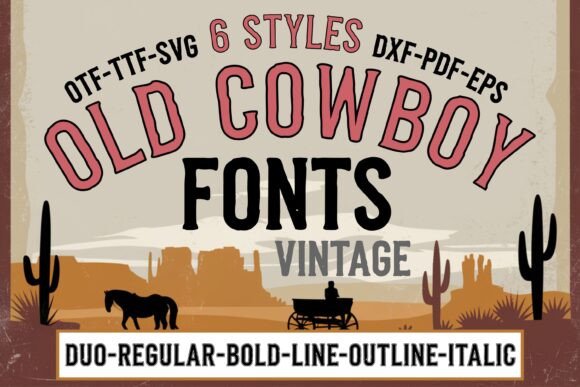
What makes the Old Cowboy Bundle particularly useful for designers and creators is its built-in versatility. It’s not a single style but a family of six, each with a distinct purpose. The Regular and Bold styles provide solid, impactful headlines. The Line and Outline versions offer a lighter touch, great for overlays or when you need more negative space. The Italic adds a dynamic, forward-moving energy. However, the true standout is the Old Cowboy Duo style.
This unique style pairs bold uppercase letters with outline lowercase letters, perfectly aligned. This creates a stunning two-tone effect when layered with different colors. Imagine a poster for a rodeo event: the title "LAST CHANCE RODEO" could have the uppercase letters in a deep, weathered red and the lowercase in a complementary gold outline, creating depth and visual interest that a flat font simply cannot achieve. This feature alone opens up creative possibilities for merchandise, social media graphics, and event invitations that need to stand out in a crowded feed or on a busy shelf.
Practical Applications Across Industries
The utility of a font like this extends far beyond themed parties. Let’s break down where it can make a real impact:
- Brand Identity & Logo Design: For businesses in sectors like artisanal food, craft beverages, men's grooming, or outdoor apparel, Old Cowboy can become the cornerstone of a brand's visual identity. It pairs exceptionally well with clean sans-serif fonts for body text, creating a hierarchy that is both engaging and readable.
- Packaging & Merchandise: On a coffee bag, a hot sauce label, or a t-shirt, the textured details of the font add a tactile, premium feel. It suggests craftsmanship and care, which can justify a higher price point and build customer loyalty.
- Digital & Print Marketing: From Facebook ads for a new line of boots to email headers for a vintage shop, the font grabs attention. For print materials like flyers, posters, or business cards, it ensures your collateral feels substantial and memorable.
- Editorial & Content Creation: Bloggers and publishers covering topics like history, travel, or DIY projects can use it for chapter titles, pull quotes, or section headers to enhance the narrative and visual flow of their content.
Integrating Old Cowboy into Your Design Workflow
Adopting a new display font requires some strategic thinking to ensure it enhances rather than overwhelms your project. Here’s how to approach it practically:
Choose the Right Style for the Job. Don’t default to the boldest option. A vintage-style wedding invitation might call for the Italic or Outline style for elegance, while a construction company’s safety poster demands the weight and clarity of Bold.
Master the Art of Font Pairing. A character-heavy font like Old Cowboy needs a neutral partner. Pair it with a simple, geometric sans-serif like Montserrat or a clean serif like Lora for body copy. This contrast ensures readability while letting the headline font do its job of capturing the theme. Test your pairings at various sizes to see how they interact.
Prioritize Readability in Context. This is a display font, best used for short, impactful text—headlines, logos, and titles. Avoid setting entire paragraphs in it. For longer text, always use a highly legible companion font. Consider the viewing distance; what works on a large poster may be illegible as fine print on a product label.
Leverage the Full Bundle. Don’t just use one style. Use Regular for a main headline, Bold for a key call-to-action button, and Outline for a secondary element on the same page. This creates a cohesive system that adds professional depth to your designs.
Understand the Files. The bundle is provided in OTF, TTF, SVG, DXF, PDF, and EPS. This means you’re covered whether you’re designing in Adobe Illustrator, Affinity Designer, or using a cutting machine like a Cricut or Silhouette for physical crafts. Always check the licensing terms for your intended use, especially for commercial projects, to ensure compliance.
Ultimately, the Old Cowboy Bundle is more than a set of glyphs; it's a design asset that solves a specific creative problem. It provides the tools to evoke a powerful, timeless aesthetic with consistency and professionalism. By understanding its styles, pairing it wisely, and applying it to the right projects, you can transform a standard design into something with genuine character and narrative depth, connecting with an audience that appreciates authenticity and bold visual storytelling.