Vernacular Serif: The Swiss-Born Typeface for Cohesive Branding
There’s a moment in every design project where the typeface either disappears into the background or demands the spotlight. You want something that does neither—something that feels inevitable, like it was always meant to be there. That quiet confidence is exactly what defines the Vernacular Serif family. Born from the mind of Swiss designer Hans-Jürg Hunziker, this isn’t just another serif font; it’s a carefully calibrated system for building visual worlds that feel both timeless and distinctly human.
A Legacy of Precision Meets Warmth
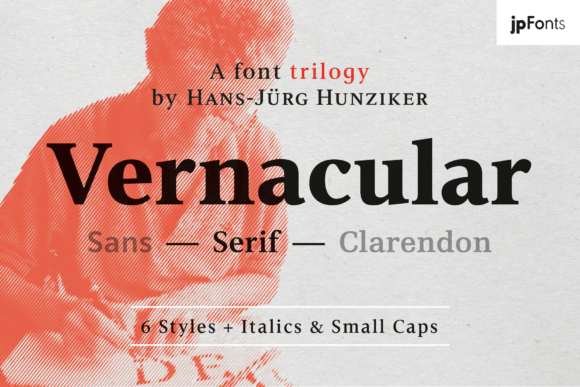
Hunziker’s background working alongside Adrian Frutiger in Paris is the kind of detail that tells you everything you need to know about the care invested in this typeface. The Vernacular trilogy—encompassing Sans, Serif, and Clarendon families—is built on the concept of a transitional Linear Antiqua, but it’s far from cold or mechanical. Each style carries what can only be described as a “noble and sympathetic expression,” a warmth that makes it approachable without sacrificing sophistication. This balance is critical for anyone building a brand or designing for an audience that values both professionalism and personality.
What sets the Vernacular Serif apart within this trio is its traditional diagonal axis and horizontal endings, giving it a classic, bookish feel. Yet, it shares the same straight stems and proportional harmony as its siblings. This thoughtful design means you can pair the serif for body text with the sans for headlines, or use the clarendon for emphasis, all while maintaining a seamless visual conversation. For a small business owner crafting a brand identity or a content creator developing a cohesive online presence, this built-in compatibility is a game-changer. It eliminates the guesswork and potential clash of mixing fonts from different families.
From Packaging to Pixels: Practical Applications
The real test of a typeface is how it performs in the wild. The Vernacular Serif’s versatility makes it a workhorse across a stunning range of applications. Imagine it on the packaging for artisanal goods—the serif’s gentle curves and readable forms lending an air of established craftsmanship. Picture it in a logo design, where its balanced letterforms create a mark that’s both memorable and trustworthy. For editorial layouts and book design, its 12 finely tuned weights (including separately drawn italics) allow for nuanced typographic hierarchies that guide the reader’s eye effortlessly.
But its utility extends far beyond print. In the digital realm, the Vernacular Serif shines in web design and blog posts, where readability is paramount. Its clear structure and generous spacing make long-form content a pleasure to read on screens. For social media graphics, the font’s distinct personality helps posts stand out in a crowded feed while maintaining a consistent brand voice. Whether you’re designing a website header, a promotional poster, or even merchandise like tote bags and t-shirts, this font adapts to the context while retaining its core identity.
Building Recognition with a Typeface System
One of the most significant challenges in branding is achieving visual consistency across every touchpoint. This is where the Vernacular system truly excels. By using the Serif for long-form reading, the Sans for clean user interfaces, and the Clarendon for bold calls to action, you create a unified typographic language. Your audience begins to recognize your brand not just by your logo, but by the consistent feel of your text, whether they’re reading an email newsletter, browsing your online store, or flipping through a printed brochure.
This consistency directly fuels brand recognition. When every piece of communication feels like it belongs to the same family, it builds a subconscious trust with your audience. The professional presentation that comes from using a well-considered premium font like this signals quality and attention to detail. For entrepreneurs and marketers, this translates to a more engaged audience that takes your message seriously because the visual delivery is as polished as the content itself.
Making Smart Choices with a Premium Font
Investing in a commercial font like the Vernacular trilogy is a strategic decision. Before you commit, take the time to explore the full range of 12 weights in each style. Test the light versions for elegant invitations, the bold for impactful posters, and the regular for body copy. Consider how the tabular and proportional figures—both included—will serve your financial reports or data-heavy presentations. The ability to switch between lining and old-style numerals within the same font is a subtle but powerful tool for sophisticated typographic design.
When pairing fonts, look beyond the Vernacular family. While the system is designed to work beautifully together, it also plays well with others. A clean, geometric sans serif can provide a modern counterpoint, while a subtle script or handwritten font can add a touch of personal flair for specific projects like wedding invitations or boutique product labels. Always test your pairings in context—see how they look on a mobile screen, in a printed mock-up, and in a busy social media feed. The goal is harmony, not competition.
Ultimately, choosing a font is about finding a voice for your project. The Vernacular Serif, with its Swiss precision and inherent warmth, offers a voice that is articulate, reliable, and adaptable. It’s not just a collection of glyphs; it’s a toolkit for building visual stories that resonate. For the designer seeking a coherent system, the business owner aiming for a polished image, or the creator crafting a distinct aesthetic, it provides the foundation to make that vision tangible, one beautifully formed letter at a time.